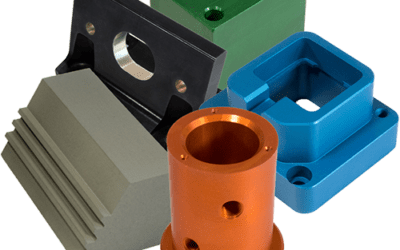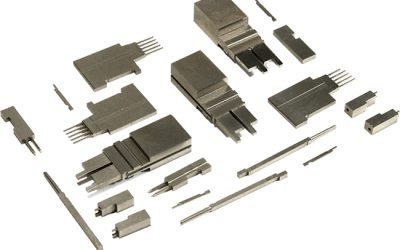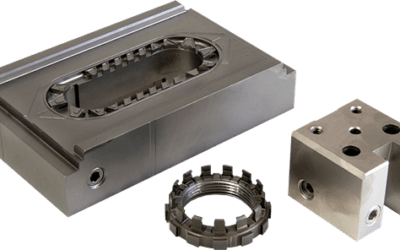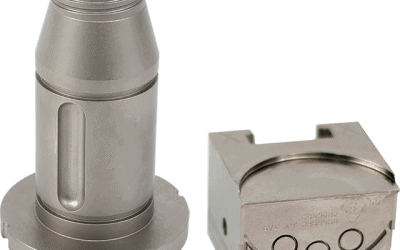
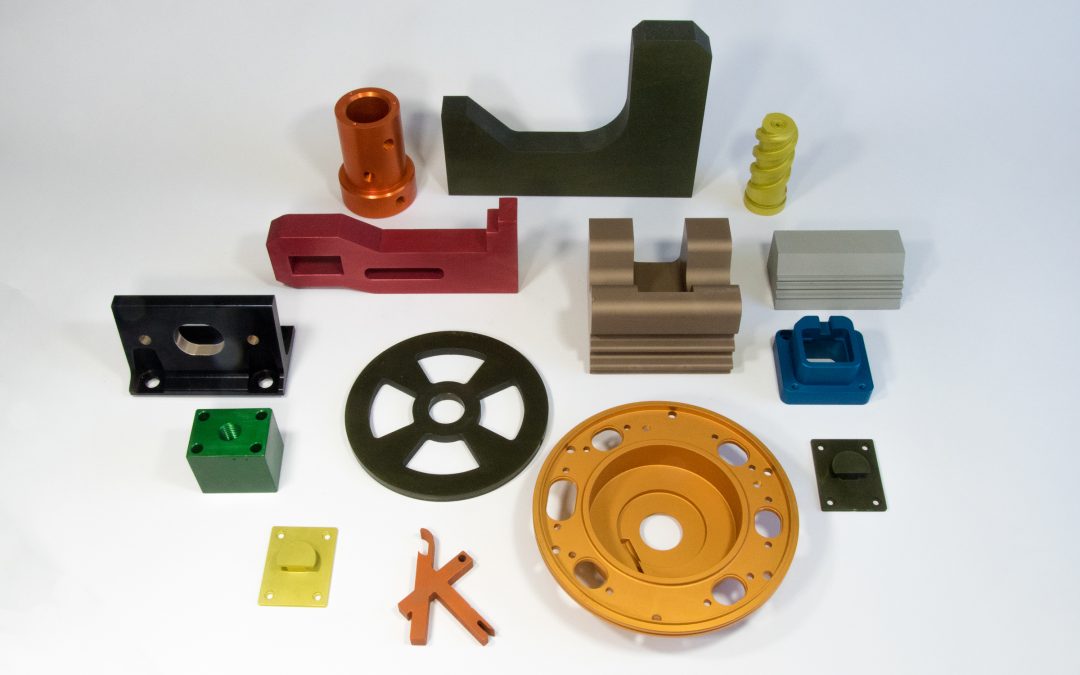
Hard Anodizing Services
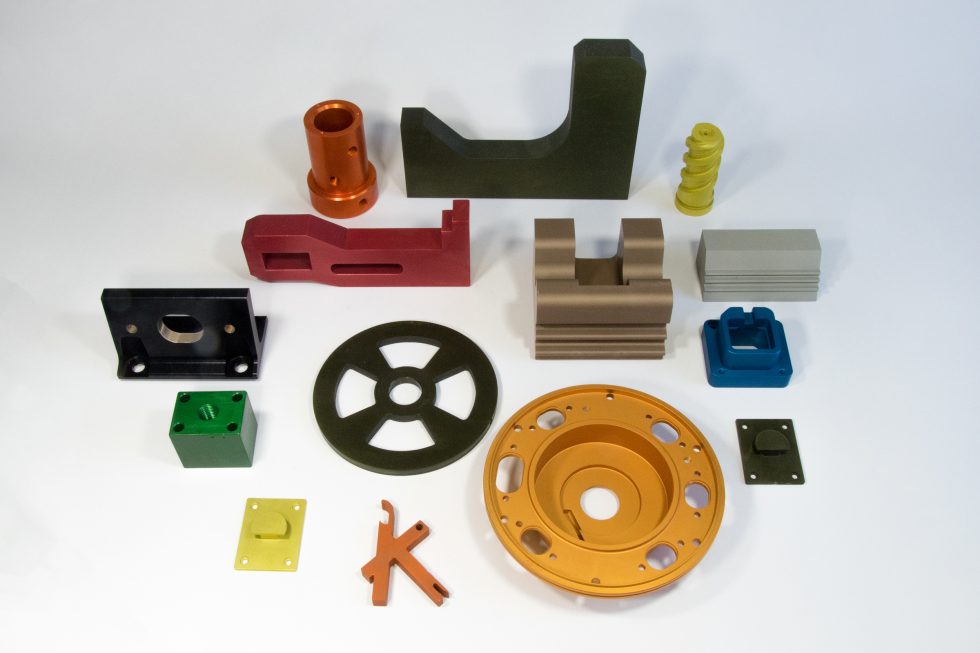
Why Engineering Teams Choose PFI for Critical Hard Anodizing Services
Executive Summary
- Dimensional Precision: PFI Inc. proactively manages the “50/50” penetration-to-growth ratio to prevent assembly failures.
- Complex Geometries: Our facility specializes in manual masking for intricate parts, ensuring critical threads and grounding points remain uncoated.
- Verifiable Hardness: We maintain strict bath temperatures (34°F–36°F) to ensure a 65 RC hardness that rivals that of tool steel.
Solving the Tolerance Stack-up Headache
Precision parts often fail final assembly because the plating vendor neglected to account for dimensional growth. A shaft machined for printing will seize in its bore if the hard-coat buildup is not calculated correctly. This forces your team to waste hours on manual rework just to make components fit.
Bridging the gap between machining tolerances and plating thickness presents a challenging logistical issue. PFI Inc. provides hard anodizing services that eliminate this friction by verifying every growth calculation before the metal enters the tank. Read on to discover why leading manufacturers trust PFI to deliver production-ready, certified hardware.
Get a Quote for Hard Anodizing Services
Precision Tolerance Management vs. “Dip and Ship”
PFI Inc. prevents assembly issues by calculating and verifying the specific dimensional growth of the oxide layer before processing begins.
The Mechanics of Dimensional Growth
The most common failure mode in hard anodizing is the “oversized part.” Type 3 anodizing converts the aluminum substrate into aluminum oxide and alters the component’s physical dimensions. This follows a strict 50/50 rule: a .002” thick layer of coating penetrates .001” into the metal and builds .001” outward.
High-volume shops often ignore this growth and deliver oversized parts. PFI Inc. reviews prints to verify that machining tolerances account for the buildup. This process ensures components fit immediately, without the need for expensive post-process grinding.
Preventing Assembly Seizures
Our dimensional verification process eliminates the risk of seizing assemblies and reduces total manufacturing costs by getting the tolerance right the first time.
Advanced Masking for Complex Geometries
We provide labor-intensive manual masking services to protect critical features that cannot function with a dielectric coating.
The Risk to Threads and Grounds
Hard coat anodizing creates a ceramic-like, non-conductive surface. While this is excellent for corrosion resistance, it is disastrous for fine threads, grounding points, or high-precision sealing surfaces. A “dip-and-ship” vendor often lacks the capability or willingness to mask these features, resulting in parts that must be re-machined or scrapped.
PFI Inc. technicians apply custom plugs and liquid masking agents to seal specific component areas. This manual process protects internal threads to guarantee proper fastener engagement. We also preserve raw aluminum contact points for necessary electrical grounding.
Enabling Complex Component Design
PFI’s masking capabilities enable hard anodizing of intricate aerospace and medical components where selective surface treatment is mandatory.
Process Control for Maximum Wear Resistance
PFI Inc. maintains a chilled sulfuric acid bath between 34°F and 36°F to produce a coating with a hardness of approximately 65 Rockwell C (RC).
Temperature Dictates Durability
Not all “hard coats” are created equal. The hardness of the aluminum oxide layer depends directly on the tank temperature and the applied current density. If the bath temperature rises even slightly, the coating becomes softer and more porous, losing its abrasion-resistant properties.
PFI Inc. enforces rigid environmental controls to differentiate our services. Freezing tank temperatures trigger rapid, dense oxidation of the aluminum surface. This process creates a low-porosity finish that rivals the hardness of nitrided steel.
Guaranteeing 65 RC Performance
Strict temperature regulation ensures that every batch achieves the 65 RC hardness required to withstand extreme industrial friction and abrasion.
Military-Grade Reliability and Certification
We certify our Type 3 black hard coat services to MIL-A-8625 specifications, supporting OEM and military suppliers from prototype to production.
Defining Reliability Through Traceability
Reliability in the plating industry is defined by traceability. PFI Inc. has an unrivaled track record for performance because we treat every job as a military contract. We plate to MIL-A-8625 specs, which specify the exact process controls, coating thickness, and salt-spray resistance required for defense hardware.
PFI Inc. generates verifiable certifications that link tank data to your specific purchase order. This documentation proves your parts meet the dielectric and abrasion standards specified in the design. Valid paper trails are critical for regulated industries.
Meeting Rigorous Defense Standards
Partnering with PFI guarantees that your components meet the rigorous regulatory and performance standards required for aerospace and defense contracts.
Hard Anodizing Services Frequently Asked Questions
Q: What is the difference between Type II and Type III anodizing?
A: Type II is a thinner cosmetic finish (0.0001”–0.001”) done at room temperature, while Type III is a thicker, harder industrial coating (0.0005”–0.003”) performed near freezing.
Q: Can you hard coat anodize steel?
A: No, the process is chemically specific to aluminum; placing steel in the sulfuric acid bath will dissolve the part.
Q: Is the hard coat finish conductive?
A: No, the aluminum oxide layer is a dielectric insulator and will not conduct electricity.
Q: What is the typical thickness of a hard coat?
A: Thickness generally ranges from 0.0005 inches to 0.0030 inches, depending on the specific alloy and application requirements.
Q: Does PFI Inc. offer black hard coat anodizing?
A: Yes, we provide high-quality black plating services that meet military and OEM aesthetic standards.
Choose PFI for Precision Hard Anodizing Services
Sourcing reliable hard anodizing services requires more than just finding a shop with a tank. It demands a technical partner capable of managing strict tolerances and complex masking requirements.
At PFI, we combine precise chemical controls with rigorous dimensional verification to prevent assembly failures. Our team delivers certified hardware that meets the demanding specifications of the aerospace and defense industries.
Click below for a quote and to learn more about how our team can support your next project.