Mold Release Coatings Outperform Sprays in Reducing Cleaning Shut Downs
Mold release sprays are intended to help parts eject cleanly, but the residue they leave builds up in vents and dumps with every application. That buildup leads to more cleaning shutdowns that cost production hours. Keeping molds running longer between cleanings can be a constant challenge for shops that spray by hand.
At PFI, our proprietary mold release coatings outperform sprays in reducing cleaning shut downs. Your molds stay in the press, and your operators stay on production instead of reapplying spray. Read on to learn more about how our mold release coatings reduce cleaning shutdowns compared to sprays.
Get a Quote for PFI Mold Release Coatings
Are Frequent Shutdowns Related to Mold Release Sprays?
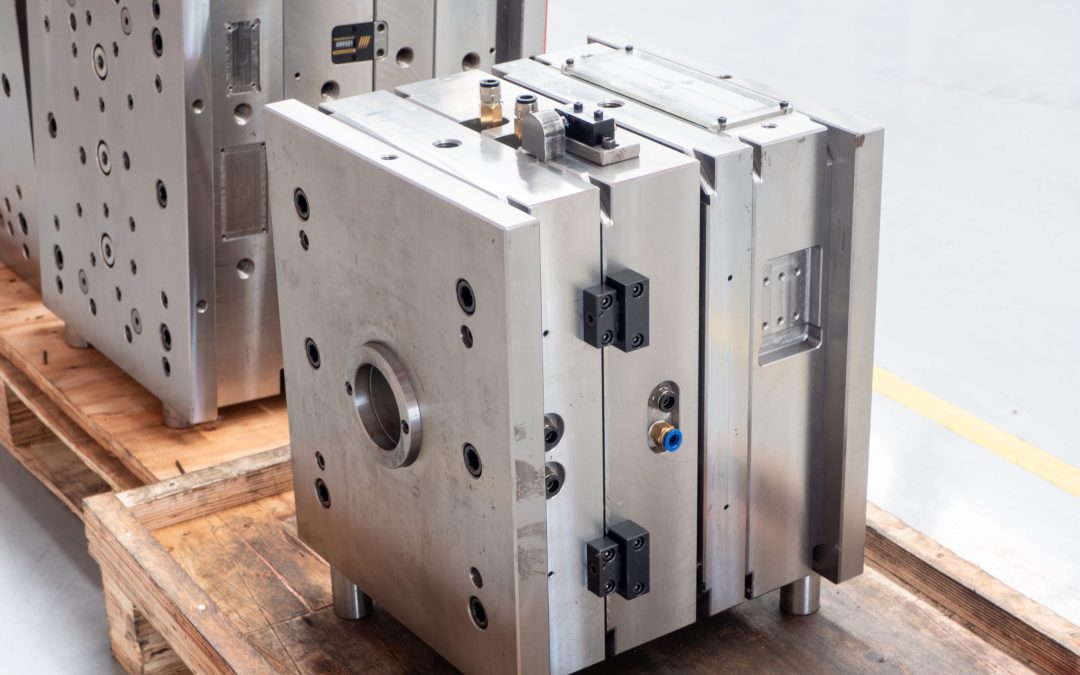
Every injection mold accumulates residue during production. Resin outgassing and repeated part release leave a film that builds up at specific points across the tool. That residue causes flash, sticking parts, and inconsistent injection pressure, and the mold has to stop for cleaning.
Buildup typically concentrates at:
- Vents
- Parting lines
- Dumps and runners
- Ejector pin bores
Mold release sprays add another layer to that buildup. Manual application rarely lays an even film across the entire cavity, and the resulting high and low spots are where excess material tends to collect first. Spray film wears unevenly, so reapplication recoats the entire mold instead of just the worn section. That extra step often pushes the next cleaning stop earlier than the production schedule allows.
PFI Mold Release Coatings Reduce Cleaning Downtime
PFI offers two proprietary coatings that reduce a mold’s need for release sprays: Dura Slick and Lubricoat. Dura Slick handles high-wear tooling, and Lubricoat resists corrosive environments. The right choice depends on the resin, temperature, and corrosion exposure of the job.
Dura Slick for High Wear Molds
Dura Slick is a nickel-base coating with a coefficient of friction around .05. Hardness runs 56 to 58 Rockwell C as plated, and post-baking raises it to 67 to 68. The same treatment lifts the breakdown temperature from 1,650°F to 1,790°F, so the coating holds up on molds that run hot. We also use Dura Slick to rebuild worn mold surfaces instead of replacing the tool.
Lubricoat for Corrosion and Part Release
Lubricoat combines electroless nickel with PTFE and lubricity-inducing polymers, giving the coating a coefficient of friction near .08. The nickel-phosphorus deposit resists corrosion in molds exposed to moisture or chemical residue, and it adheres to tool steels, aluminum, and copper alloys. Breakdown temperature is 650°F, so molds that run hotter are better candidates for Dura Slick. We also offer Lubricoat as a PFAS-free coating that meets AMS 2405 and ASTM B733.
Even Coatings Reduce Vent Buildup
PFI applies electroless coatings from a chemical bath rather than an electric current. The bath deposits an even layer across the mold’s full geometry, including deep recesses and fine detail. Electroplating concentrates metal at edges and corners, while a chemical bath covers those areas evenly.
Vents, parting lines, and ejector pin bores collect residue first when coverage is uneven. A coating that reaches those features at full thickness leaves no thin spot where material can gather. That uniformity lets the coated mold run longer between cleanings than one that depends on manual spray coverage.
Coated Molds Resist Wear and Corrosion
Clean release protects the mold surface as much as it protects the part. A part that sticks has to be forced out, and prying against the cavity scratches the finish. Every cycle then drags across the damaged surface, and that abrasion is what wears a tool out of tolerance.
The nickel in both coatings also guards the steel between runs. Humid storage and corrosive resin gases attack bare tool steel, and the deposit blocks both. The coating itself wears before the steel does, and we strip and reapply it without damaging the base metal.
Mold Release Coatings and Sprays Compared
Sprays and coatings solve the same problem, but they behave differently once a mold goes into the press:
| Factor | Mold Release Sprays |
PFI Mold Release Coatings |
|
Application |
Sprayed by hand and reapplied throughout the mold’s life |
Plated once, then runs without reapplication |
|
Coverage |
Uneven, depends on operator technique |
Uniform across the mold’s full geometry |
|
Residue in vents and dumps |
Builds with every application |
No film added after plating |
|
Operator involvement |
Frequent interruptions to reapply |
None between scheduled cleanings |
|
Release life |
Wears unevenly within the run |
Consistent for hundreds of thousands of shots |
|
Effect on cleaning |
Pushes the next cleaning stop earlier |
Extends the time between cleanings |
When Mold Release Coatings Outperform Sprays
Release sprays still make sense for short runs and trial work. A new mold can prove out its release behavior on a food-grade or water-based spray, and a prototype tool may never see enough cycles to justify plating. Those runs end before residue can build, so spray-driven shutdowns never enter the picture.
Sustained production reverses that math, because every spray interruption repeats across thousands of cycles. Medical and electronics molders face a tighter version of the same problem, since spray mist that lands on the part can fail inspection. Against abrasive or high-temperature resins, Dura Slick holds up past 1,600°F, and some coated molds have run beyond 2 million cycles with regular maintenance.
Choose PFI for Superior Mold Release Coatings
Mold release sprays prevent sticking but leave residue that forces more frequent cleaning stops. A plated coating releases parts without adding film and lets the mold run longer between cleanings.
PFI has plated injection mold tooling for more than 30 years, and our coatings help molders spend more time running and less time cleaning. Send us your drawings or a worn mold, and we will recommend the right coating for your application.
Click below for a quote and to learn more about extending the time between cleanings on your molds.