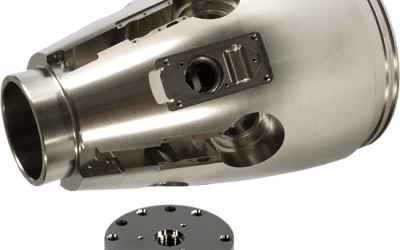

Industry-Leading Aluminum Anodizing Services
Executive Summary
- Type III hard coat anodizing delivers a dense, highly durable oxide layer designed to withstand extreme friction and harsh environments for defense and aerospace applications.
- Type II anodizing provides versatile protection that enhances corrosion resistance while allowing for precise dimensional control and cosmetic color dyeing.
- PFI offers both Type II and Type III aluminum anodizing services under one roof, streamlining your supply chain with strict MIL-A-8625 compliance.
Discover the Benefits of Aluminum Anodizing Services from PFI
You may be familiar with the anodizing process, but we want to help you discover its full potential so you can get the most out of contracting PFI. We are the go-to provider for aluminum anodizing services and continue to build on our 30+ year track record of serving customers in various industries.
With skilled workers able to perform both Type II and Type III Anodizing on parts intended for an endless range of applications, we are confident we can serve your company. Read on to learn more about our aluminum anodizing services and discover what sets our work apart in protecting your aluminum from corrosion and wear.
Request a Quote for Aluminum Anodizing Services
PFI Delivers Expert Aluminum Anodizing Services for Complex Manufacturing
Progress for Industry, Inc. (PFI) has provided premium aluminum anodizing services to molders and manufacturers since 1982. Our highly experienced technical team handles everything from standard commercial orders to highly specialized military components under one roof.
Our Comprehensive Capabilities
- Decades of Experience: Our management and technical staff bring decades of hands-on experience to every project. This deep industry knowledge allows us to consistently meet tight tolerances on precision molds and complex component constructions.
- MIL-A-8625 Compliance: We process components to strict MIL-A-8625 specifications for OEM and military suppliers. Adhering to these rigorous defense standards ensures superior performance and reliability across all our commercial work.
- Single-Source Processing: Our facility is fully equipped to perform both versatile Type II and heavy-duty Type III hard coat anodizing. This single-source capability streamlines the supply chain for clients requiring multiple distinct finishes.
- Advanced PTFE Integration: We offer specialized polytetrafluoroethylene (PTFE) based formulas for our Type III hard-coat applications. This advanced Teflon integration lowers the coefficient of friction by up to 50 percent, creating exceptionally lubricious surfaces.
- Precision Masking Techniques: Our technicians apply highly accurate masking to protect close-tolerance mating surfaces during chemical bath processing. This careful preparation prevents unwanted buildup of material on critical threads and delicate internal geometries.
- Quality Assurance Program: An internal testing protocol verifies all coating thicknesses and tolerances. Inspectors check every batch to confirm exact compliance with the military standard.
Strategic Vendor Consolidation Reduces Supply Chain Risk
Partnering with a proven single-source facility eliminates the logistical headaches of managing multiple specialized finishing vendors. This immediate access to military-grade quality control and advanced chemical capabilities keeps your production lines moving efficiently.
What Makes Type III Hard Coat Anodizing Essential for Aluminum?
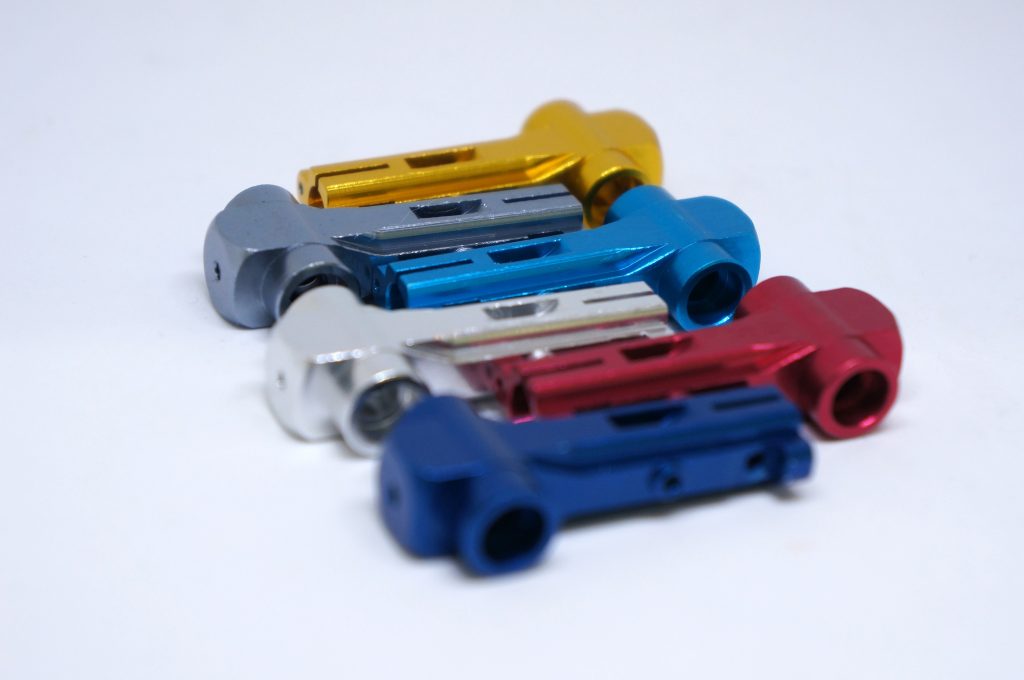
Type III hard coat anodizing is PFI’s most requested coating and the most performance-intensive anodize type covered under MIL-A-8625. The hard coat anodizing process runs under specific conditions to produce a denser, harder oxide layer suited for defense, aerospace, and high-wear industrial applications.
Core Characteristics of Type III Hard Coat Anodizing
Bath Conditions: Type III uses the same sulfuric acid chemistry as Type II but runs at 34 to 36°F rather than 68 to 70°F. Higher applied current densities at this reduced temperature result in a tight oxidation reaction, producing a harder, less porous coating.
Coating Thickness and Growth: A standard two-mil application penetrates the substrate by .001 inches and builds up the exterior by an equal amount. Engineers must machine parts to specific pre-anodize dimensions to accommodate this 50/50 growth pattern.
Hardness and Abrasion Resistance: The finished oxide layer measures approximately 65 Rockwell C. The hardened material is suitable for gears, compressor fittings, automotive components, and high-friction firearm parts.
Non-Conductivity: Aluminum oxide acts as a dielectric material and blocks electricity. Hard-coated aluminum provides a practical solution for electronic housings and assemblies requiring electrical isolation.
MIL-A-8625 Compliance: PFI processes Type III to MIL-A-8625 standards for OEM and military suppliers. This specification governs coating thickness, corrosion resistance, and abrasion resistance for defense and aerospace procurement.
Long Term Durability For Essential Hardware
Type III hard coat anodizing extends the service life of aluminum parts operating under friction, impact, or corrosive conditions. Components finished to this specification require less frequent replacement and hold dimensional tolerances longer in high-cycle applications.
How Does Type II Anodizing Provide Customizable Protection for Aluminum?
Raw aluminum offers a versatile, affordable base material for manufacturing. Type II anodizing from PFI enhances the natural strength and corrosion resistance of this metal, meeting specific industrial requirements.
Flexible Build-Up: Type II anodizing creates a total coating thickness of .0003 to .0005 inches with equal penetration depth. Technicians use this predictable growth rate to maintain tight dimensional tolerances on machined items.
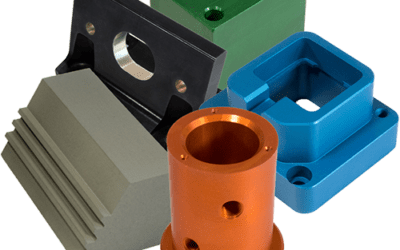
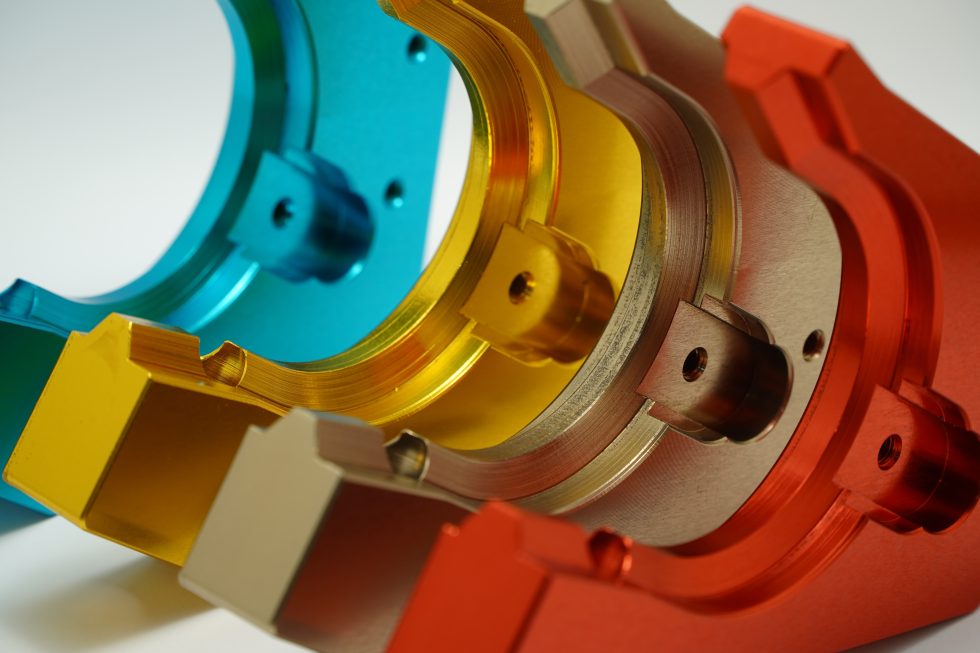
Color Application: Porous structures created during the oxidation process accept various dyes before the finish is fully sealed. Cosmetic options for these lighter coatings include black, olive, blue, and green.
Selective Masking: Tape or liquid polymers can be applied over designated areas of a component. These physical barriers prevent the accumulation of unwanted material on threads and close-tolerance mating surfaces.
Electrical Insulation: The anodizing process creates a dielectric barrier on the metal surface. This non-conductive modification isolates electronic housings and assemblies from electrical currents.
Industry Versatility: Lighter oxide layers suit equipment requiring general wear protection rather than extreme friction resistance. Typical uses include medical devices, aerospace hardware, and automotive parts.
Tailored Finishes Maximize Manufacturing Versatility
Customizing the anodizing process ensures that every component receives the exact level of protection and aesthetic appeal required for its specific application. This adaptability allows manufacturers to confidently use lightweight aluminum across a broader range of environments without sacrificing performance.
How Does Part Design and Preparation Impact Anodizing Success?
The final quality of an anodic coating depends heavily on the initial engineering and fabrication of the raw aluminum component. Proper alloy selection and precise dimensional planning ensure the chemical bath produces a uniform, tolerance-compliant oxide layer.
Engineering Considerations for Optimal Surface Finishing
Dimensional Growth: Aluminum oxide occupies roughly twice the volume of raw aluminum during oxidation. Engineers must account for this dimensional growth during the design phase to accommodate the added thickness.
Alloy Selection: The specific grade of the aluminum substrate directly dictates the final thickness and visual appearance of the coating. Selecting the correct alloy ensures predictable metal responses to the acid bath and achieves the desired protective properties.
Detail Preservation: Thin anodic coatings measuring as small as 0.05 mils will not destroy etched designs or delicate scrollwork. Our experienced specialists carefully monitor the bath parameters to maintain the structural integrity of highly intricate cosmetic features.
Welding and Fabrication: Proper fabrication techniques are absolutely essential before sending any component out for surface finishing. Using low-heat welding methods prevents structural warping and ensures uniform oxide layer development across the entire part.
Environmental Matching: The intended end-use environment must always dictate the specific coating selection. Heavy-duty exterior items require thicker finishes for maximum corrosion resistance, and interior components typically only need standard protective applications.
Proactive Engineering Eliminates Costly Production Delays
Designing parts with the final chemical finishing process in mind prevents unexpected dimensional tolerance failures during final assembly. This proactive approach guarantees your components function exactly as intended without requiring expensive rework or secondary machining.
Aluminum Anodizing Frequently Asked Questions
Q: Is the aluminum anodizing process safe for the environment?
A: Anodizing accelerates a natural oxidation process without producing harmful by-products to ensure environmental safety.
Q: Does Type III hard coat anodizing need to be sealed?
A: Sealing remains unnecessary for optimal corrosion resistance in most cases, but it helps prevent color fading on dyed hard coats.
Q: What is the main difference between standard and hardcoat anodizing?
A: The primary difference between Type III vs. Type II hardcoat anodizing involves the final coating thickness.
Q: How does hard coat anodizing differ from traditional metal plating?
A: Traditional plating adds the entire coating thickness to the outside surface, but hard coat anodizing penetrates the aluminum substrate and builds up on the exterior to minimize dimensional changes.
Q: What voltage is required for the anodizing process?
A: Anodizing utilizes a high-voltage electrical current of up to 100V alongside a sulfuric acid bath to successfully create the protective oxide layer on the aluminum part.
Partner With PFI For High-Quality Aluminum Anodizing Services
Proper surface finishing protects critical components from harsh operational environments. Both Type II and Type III anodizing address specific performance requirements across commercial, defense, and aerospace manufacturing.
At PFI, we anodize aluminum components to Type II and Type III MIL-A-8625 standards for OEM and military clients from a single facility. Our technical staff brings decades of hands-on experience to precision molds and complex component geometries on every order.
Click below to request a quote and learn more about our comprehensive metal finishing capabilities.