
PFI’s Advanced Proprietary PFAS-Free Nickel PTFE Coating
TL;DR – Article Summary
- Composite Engineering: Lubricoat is a proprietary formulation that combines the hardness of electroless nickel with the low friction of PTFE and specific polymers to create a dual-function surface.
- Standard Compliance: Processing components with this finish often meet or exceed AMS 2405 & ASTM B 733 standards and ensure reliability for critical military and aerospace applications.
- Performance Metrics: The coating provides a coefficient of friction of approximately 0.08 and withstands temperatures up to 650°F.
Solving the Friction and Corrosion Problem
Molding and industrial applications often require coatings that provide both corrosion protection and low-friction performance. Many protective finishes excel at one function while leaving the other unaddressed. It can be a challenge to source a single deposit that handles both requirements.
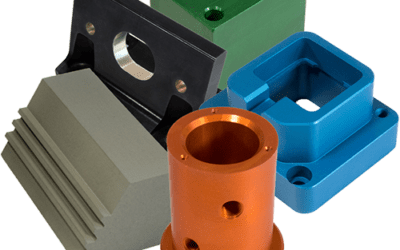
PFI solves this problem with Lubricoat, our proprietary PFAS-free nickel PTFE coating that combines corrosion resistance, low-friction performance, and wear protection in one deposit. Our electroless application process delivers uniform thickness on complex geometries while meeting AMS 2405 and ASTM B733 standards.
Read on to learn more about how Lubricoat delivers the multi-functional protection your components require.
Get a Quote for PFAS-Free Nickel PTFE Coating
Why Is Standard Corrosion Protection Often Insufficient?
Standard corrosion coatings fail because they lack the low friction and wear resistance required for dynamic machinery and molding operations.
The Four Primary Drivers of Surface Degradation
Friction: Surface contact generates heat and material transfer under load. This friction causes galling and seizure in moving parts, leading to equipment lock-up.
Wear: Repeated production cycles degrade dimensional accuracy in molds and tooling. This physical erosion necessitates costly replacement or refurbishment.
Heat Exposure: Elevated processing temperatures break down coating integrity. Once the thermal limit is breached, protective properties fail rapidly.
Corrosion: Chemical attack from fluids and gases compromises the base material. Even if a standard finish looks intact, micro-cracks from wear can allow environmental exposure to penetrate the substrate.
Preventing System Lock-Up and Material Loss
Components experiencing combined stresses from friction, corrosion, and heat require coatings engineered to handle all three. Single-function treatments leave performance gaps that accelerate failure.
How Lubricoat Delivers All-In-One Surface Performance
Lubricoat is a PFAS-free nickel coating that integrates the chemical resistance of electroless nickel plating with the lubricity of PTFE to solve wear and corrosion issues simultaneously.
Technical Specifications: Hardness, Friction, and Heat
The PFAS-free nickel PTFE finish provides measurable performance, including:
- Thickness Range: Deposition ranges from .000025″ to .003″. This precise control allows engineers to account for the coating in final dimensional tolerances.
- Coefficient of Friction: The surface achieves a CoF of approximately 0.08. This extreme slickness ensures superior release and prevents galling.
- Hardness: The deposit measures 48-52 Rockwell C as plated. Heat treating increases this hardness to nearly 65 Rc for extreme wear applications.
- Temperature Resistance: A breakdown temperature of 650°F supports high-heat molding and industrial processes without degrading.
Phosphorus content resists corrosion better than standard nickel deposits. PTFE particles reduce friction more than electroless nickel alone. Polymer additives further improve lubricity. This combination eliminates the need for mold-release sprays in many applications.
Replacing Secondary Lubricants with Permanent Protection
Combining hardness with lubricity eliminates the need for secondary lubricants and extends the service life of high-wear parts. This replaces the recurring expense of manual sprays (which are often prone to inconsistent application) with a one-time investment that guarantees uniform coverage.
Industries and Components That Require a PFAS-Free Nickel PTFE Finish
PFAS-free nickel PTFE finishes are ideal for industries requiring standards-compliant finishes for components experiencing combined corrosion and friction stresses.
Military-Grade Reliability for Demanding Environments
Aerospace and defense manufacturers specify PFAS-free nickel PTFE coatings for components made from tool steels, aluminum, copper, and beryllium. These industries rely on the coating because it meets rigorous specifications, such as AMS 2405 and ASTM B733, which validate performance for critical flight and field hardware.
Common applications include:
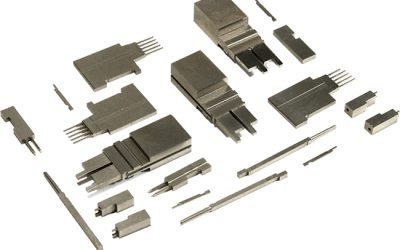
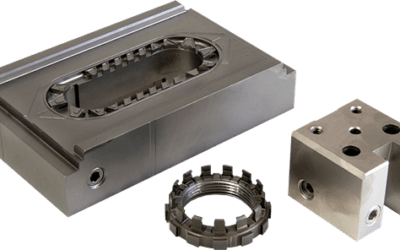
- New Component Protection: Fresh mold inserts and tooling gain immediate corrosion resistance and release properties without break-in periods.
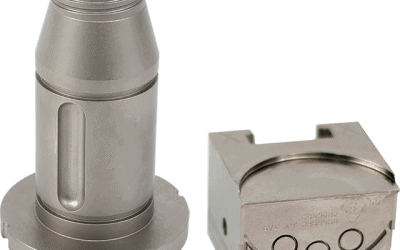
- Equipment Salvage: Worn molding components receive a protective PFAS-free nickel PTFE coating that extends service life at a fraction of replacement cost. The chemical removal process allows future stripping without substrate damage when parts require dimensional restoration.
- Industry-Specific Parts:
-
- Military & Aerospace: Landing gear, actuators, and weapon systems exposed to salt spray and mechanical stress.
- Oil & Gas: Downhole tools and valves handling corrosive fluids and abrasive conditions.
- Automotive: Pistons and transmission components requiring friction reduction.
- Plastics: Injection molds and extrusion dies across manufacturing sectors.
Lower Procurement Risk Through Documented Compliance
Standards compliance and cross-industry adoption validate performance under documented test conditions. Selecting a finish that meets established specifications reduces procurement risk and ensures consistent results.
How Is the Lubricoat PFAS-Free Nickel PTFE Coating Applied?
PFI utilizes an electroless chemical bath that deposits a uniform layer without the use of electrical anodes.
Cost Savings Through Fixtureless Chemical Deposition
The autocatalytic process operates through chemical reduction rather than electrical current. Prepared parts immersed in the solution receive uniform deposits on all exposed surfaces. The chemistry eliminates the “dog-boning” effect, where electroplating concentrates material on edges and corners.
This chemical approach outperforms standard electroplating in four specific areas:
- Elimination of Fixturing: The process removes the need for expensive jigs or fixtures required to establish electrical contact. This reduction in tooling requirements lowers overall processing costs.
- Geometric Uniformity: The chemical reaction deposits material evenly across irregular shapes. Operators control the deposition rate precisely through chemistry and time management rather than amperage adjustments.
- Internal Coverage: Internal passages and blind holes receive full protection as long as the solution circulates through them. This capability ensures that even the most difficult-to-reach surfaces meet specifications.
- Nondestructive Reversibility: Chemical stripping removes the coating without damaging the base metal. This feature allows for repeated refurbishment of expensive tooling without degrading the substrate.
Achieving Dimensional Consistency on Complex Part Geometries
Eliminating fixturing costs reduces processing expenses. In addition, achieving uniform deposits on complex parts ensures consistency across large-volume production runs.
Lubricoat PFAS-Free Nickel PTFE Coating FAQs
Q: What is the coefficient of friction for Lubricoat?
A: The coating provides a coefficient of friction of approximately 0.08, making it an effective dry lubricant.
Q: Does Lubricoat meet military and aerospace standards?
A: Yes. PFI processes components to meet or exceed AMS 2405 and ASTM B733 specifications.
Q: What is the typical turnaround time for this service?
A: Lubricoat turnaround times depend on several factors, including volume and part design. However, PFI is among the industry leaders in expedited turnaround times.
Q: Is Lubricoat a cost-effective solution?
A: Yes. Because the electroless process eliminates the need for expensive electrical fixtures and jigs, it is often more affordable than complex electroplating.
Q: Can a PFAS-free nickel PTFE coating restore worn parts?
A: Yes. The coating builds uniform thickness on worn surfaces, allowing you to salvage expensive tooling for a fraction of the replacement cost.
Choose Lubricoat for Superior Mold Release Protection
Lubricoat delivers more than corrosion protection by combining chemical resistance, low friction, and wear protection in a single deposit. This multi-functional approach eliminates the need for multiple treatments while meeting AMS 2405 and ASTM B 733 standards.
At PFI, we apply Lubricoat using electroless chemistry that ensures uniform deposits on complex geometries. Our team works with your specifications to match coating thickness and performance criteria to your application requirements.
Click below for a quote and to learn more about how Lubricoat can reduce maintenance costs while extending component life.