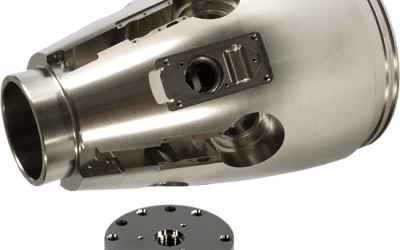
Stainless Steel Passivation Services in Erie, PA
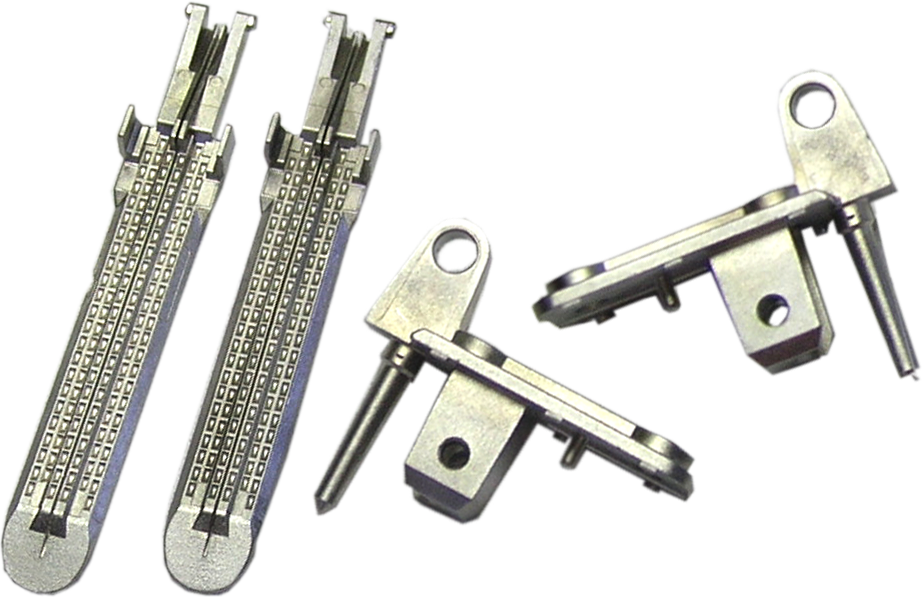
Fabrication can contaminate stainless steel surfaces and reduce their effective corrosion resistance. Machining, welding, and handling often create surface conditions that undermine the alloy’s protective capabilities.
Stainless steel passivation services from PFI chemically clean the surface and accelerate the formation of the chromium oxide barrier. This process restores corrosion resistance in accordance with A967-compliant standards.
Read on to learn more about removing manufacturing pollutants to preserve the structural integrity of your metal parts.
Get a Quote for Stainless Steel Passivation Services
What is Stainless Steel Passivation?
Passivation is a post-fabrication chemical treatment that removes free iron from the surface of stainless steel. During manufacturing processes like cutting, grinding, or machining, microscopic iron particles from tooling equipment become embedded in the steel’s surface. Submerging the components in a specific concentration of nitric or citric acid dissolves these exogenous iron deposits without damaging the base metal.
Once free iron is removed, the exposed chromium reacts with oxygen to form a protective oxide layer:
- Exposed Chromium: The removal of surface iron exposes the natural, underlying chromium inherent in the stainless steel alloy.
- Oxidation: The newly exposed chromium immediately reacts with atmospheric oxygen.
- Oxide Layer Formation: This chemical reaction generates a transparent, microscopic chromium-oxide film across the entire surface of the component.
- No Dimensional Change: The formation of this protective layer occurs without altering the physical dimensions, tolerances, or original surface finish.
Stainless Steel Passivation Services from PFI
At PFI, we offer industry-leading stainless steel passivation services in Erie, PA. For over 30 years, we’ve processed components to QQ-P 35 C and ASTM A967 specifications for a wide range of medical, aerospace, and manufacturing industries. Certification documentation ships with completed orders when customers need traceability for their quality management systems.
Our facility handles different stainless alloys based on their chromium and nickel content. For example, a 316 alloy requires different acid concentrations than a 304 grade to achieve the same oxide layer quality. We adjust bath chemistry and immersion timing to match the specific alloy and required passivation parameters rather than running every part through identical treatment cycles.
How The Chemical Passivation Process Works
Chemical passivation requires a strict chronological sequence to clean the metal surface properly. Technicians move the fabricated parts through a series of dedicated liquid tanks to properly clean and prepare the metal surface:
- Step One: Alkaline Degreasing – Heated cleaning solutions strip away residual machining oils and shop debris from the raw components.
- Step Two: Initial Rinsing – Purified water washes away the alkaline residue to expose the bare metal for chemical treatment.
- Step Three: Acid Immersion – Controlled nitric or citric acid baths dissolve the embedded iron particles without altering the underlying stainless steel.
- Step Four: Final Neutralization – Multiple secondary water rinses completely remove the harsh acidic chemicals from the treated parts.
- Step Five: Ambient Drying – Atmospheric oxygen reacts with the newly exposed chromium to form the protective oxide film.
Industries and Components That Require Passivated Steel
PFI provides passivated stainless steel services in Erie, PA, to a wide range of industries:
Medical Device Manufacturing: Surgical instruments and implantable devices contact bodily fluids and endure repeated sterilization cycles that corrode untreated surfaces.
Food and Beverage Processing: Tanks, valves, and product-contact surfaces must stay free of rust particles that contaminate food products and violate sanitation standards.
Pharmaceutical Production: Process equipment requires clean surfaces where corrosion byproducts would contaminate drug formulations and trigger regulatory failures.
Aerospace and Defense: Hydraulic components and fuel system parts operate in temperature extremes and corrosive atmospheres that exploit any surface weakness.
Semiconductor Manufacturing: Chamber walls and gas delivery lines need contamination-free surfaces because trace metals ruin wafer processing and destroy production yields.
What Happens Without Passivation
Machined stainless steel surfaces carry free iron that rusts on contact with moisture. The rust spreads across the surface and creates pitting beneath the visible corrosion. This deterioration continues even though the base stainless steel alloy remains chemically stable.
Untreated components lose corrosion resistance as surface iron oxidizes and penetrates deeper into the metal. Subsurface pitting develops where this degradation occurs, creating stress concentrations that cause mechanical failure under load. Rust particles also flake off from deteriorated surfaces and contaminate products or processes.
Parts replaced due to corrosion cost more than the original passivation treatment, while production downtime from corroded equipment multiplies these losses. Quality failures and customer returns often stem from skipping passivation during initial fabrication.
PFI’s Passivation Services Protect Your Stainless Steel Parts
Manufacturing processes can introduce surface contaminants to newly fabricated stainless steel. Chemical passivation strips away these microscopic impurities to reestablish the alloy’s natural corrosion resistance.
Passivation services from PFI maximize the baseline durability of your critical components. Our facility maintains strict ASTM A967 compliance across all production volumes. Click below to get a quote and learn more.